
Why Muhammad Ali’s iconic Olympic Opening Ceremony moment nearly never happened
When “The Greatest” lit the Olympic Cauldron at Atlanta 1996, his arm trembling from Parkinson’s disease, it became one of the Olympics most famous events - but organisers did not originally want him

This Sunday marks the 30th anniversary of the most iconic and emotional opening ceremony moment in the long history of the Olympic Games.
But the picture of Muhammad Ali, suffering from Parkinson’s disease, lighting the Olympic Cauldron at Atlanta 1996 nearly did not happen because the local organisers wanted another former world heavyweight boxing champion, Evander Holyfield.
In the end, after several months of lobbying and cajoling, it was the president of NBC Sports, Dick Ebersol, who persuaded officials in Atlanta to change their minds and give the honour to Ali.
It was in December 1995 that Ebersol met Billy Payne, the president of Atlanta 1996, to discuss plans for the opening ceremony the following summer, and it was at this meeting that Holyfield’s name was raised.
Holyfield had been raised in Atlanta, had won a bronze medal at Los Angeles 1984, and then had become the heavyweight champion of the world, so that made some sense.
But Ebersol, a self-confessed “Olympic nut”, knew going back decades that lighting the cauldron was the dramatic climax to the opening ceremony. As the last big moment in the show introducing a city to the world, it would always be its most lasting moment that people would remember long after the flame was extinguished.
Ebersol had been hugely impressed by the spectacle and drama that the last Summer Olympics, at Barcelona in 1992, had created when Spanish Paralympic archer Antonio Rebollo had lit the Olympic Cauldron by shooting a flaming arrow over it, igniting the gases.
Ebersol strongly believed Atlanta needed to come up with something even more special to mark the Centennial Games.
“It should be Muhammad Ali,” Ebersol told Payne, a conversation recalled in his memoir From Saturday Night to Sunday Night: My Forty Years of Laughter, Tears, and Touchdowns in TV.
“Muhammad Ali may be, outside of perhaps the pope, the most beloved figure in the world.
“In the Third World, he’s a hero. In the Muslim world, he’s a hero and a fellow traveller. To anybody young - just about - in the United States, he’s a man of great moral principle who was willing to go to prison.”
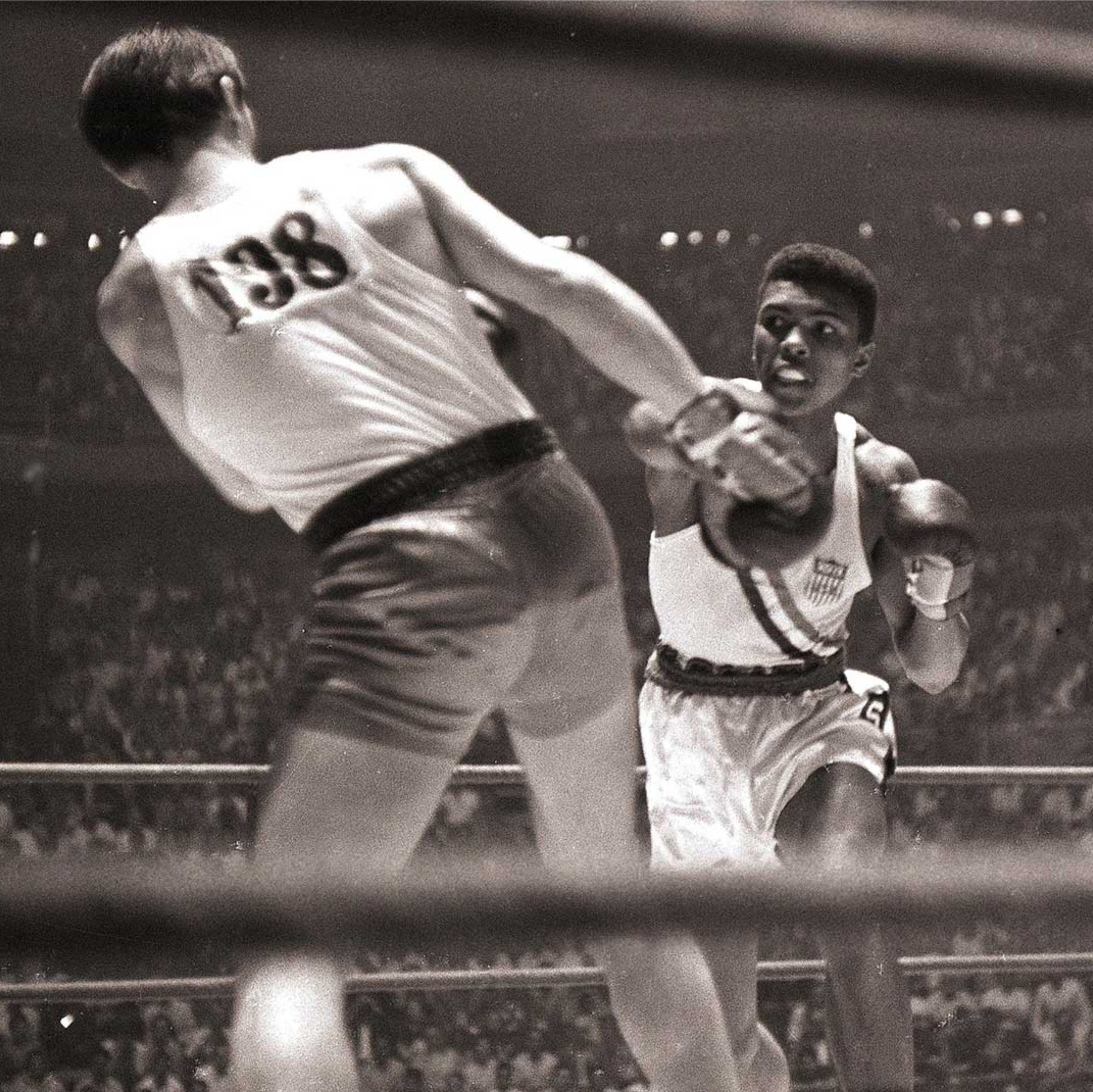
Ali’s credentials appeared impeccable. As Cassius Clay, he won an Olympic gold medal at Rome 1960 before converting to Islam and adopting the name under which he achieved legendary worldwide fame, winning the world heavyweight title three times.
His victories over Joe Frazier and George Foreman had been broadcast all over the world, making him one of the most recognisable figures in the world.
After retiring from the ring, Ali’s struggle with Parkinson’s disease, a progressive neurological condition damaging the brain, had largely silenced a man whose tongue was once as fast as his fists, but turned him into a global symbol of resilience and dignity.
But Payne, a former University of Georgia football player and real estate lawyer who had spearheaded Atlanta’s improbable bid to defeat Athens, was horrified at Ebersol’s suggestion that Ali should be handed the biggest single honour of the Olympic Games.
“I’m going to have a hard time selling a draft dodger here,” replied Payne, a reference to the fact that Ali had refused to fight in the Vietnam War.
Ebersol strongly pushed back against this mischaracterisation of Ali.
“A draft dodger? He’s not a draft dodger. His conviction was overturned eight to nil, by the U.S. Supreme Court. This isn’t politics. This is principle.”
A powerful ally of Ebersol’s was Michael Payne, the International Olympic Committee’s marketing director and who was no relation to Billy.
In a conversation he recalled in his book, Fast Tracks and Dark Deals, Michael Payne told his namesake that the person who lit the Olympic Cauldron “should be the greatest living US Olympian, in the eyes of the world.”
Billy followed that up and asked “who that would be”, to which Michael replied, “I guess that would be Muhammad Ali.”
Ebersol and Payne continued to champion Ali, finally convincing officials in Atlanta 1996 with a specially produced short film detailing Ali’s life, from Olympic gold medallist to world heavyweight champion, including the stand he took on Vietnam.
“Okay, I see what you’re saying,” Payne told Ebersol after watching the film. “That was a fantastic film. I’m seeing what you’re seeing. He’d be a popular choice.”
Ali’s longtime friend and photographer Howard Bingham acted as the conduit between officials and the former boxer, with secrecy made top priority.
“If you know that Muhammad Ali is going to be the last guy to hold the torch, there’s not much emotion with it,” said Don Mischer, the opening ceremony’s director.
Mischer, Ebersol, and three others were the only people in the world that knew about Ali’s potential appearance and everything was done to ensure there would be no leaks.
“We knew that if we brought Howard into our production offices … people would connect the dots,” said Mischer.
To avoid detection, they met in the least obvious, place possible: the Olympic Stadium’s garbage room. Mischer recounted their conversation with Bingham, warning, “If the word gets out … we have the right to change and pick someone else.”
Mischer went to extraordinary lengths to preserve the surprise, including holding a rehearsal at 2am in the dark after clearing out everyone from the stadium except a handful of security staff.
On the night of July 19 Holyfield entered the stadium alongside Greek gold medallist Voula Patoulidou before passing the Olympic Torch to Janet Evans, America’s four-time swimming champion.
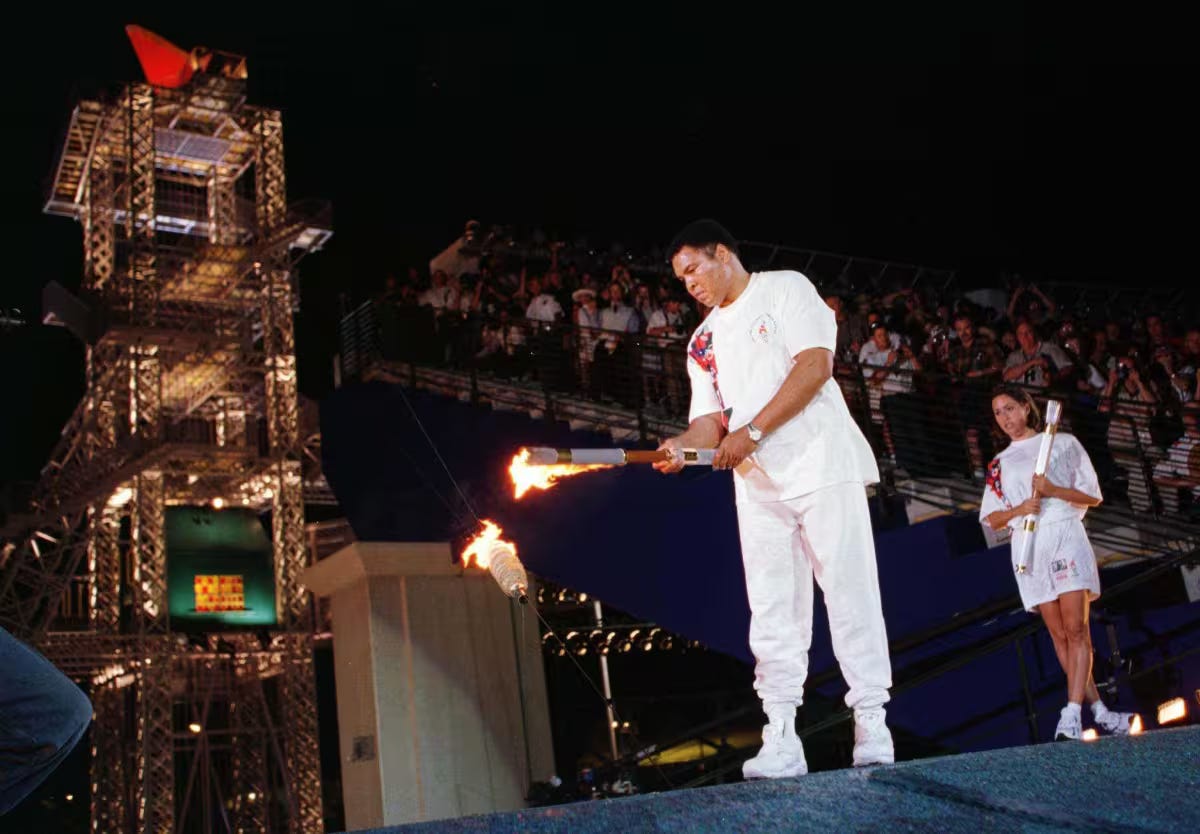
Evans ran round the final bend and up the ramp where there was a curtain protecting the identity of the final torch bearer. When they parted and there stood Ali, “The Greatest”, his hands trembling because of his illness as Evans lit his torch, and the crowd erupted.
Ali held the torch aloft for a moment, and then turned and held it downward to light the rocket. But it did not light.
“There’s a flame, but nothing is happening. The rocket is not igniting,” Ebersol recalled. “The reason was that it had been been overloaded, leaving no room for oxygen, so no combustion can take place.
“Ali may have known this intuitively. But he didn’t know it intellectually. He keeps holding the thing there, hoping that it will get lit. You can see flames licking back against his forearms.
“He didn’t exhibit any pain, but I kept waiting for him to drop his torch because it just looked like it was impossible with the flames licking back the way they were.”
In the end, enough propellant burned off to get the rocket going, flames leaping into the air as chants of “Ali! Ali! Ali! ” echoed round the stadium.
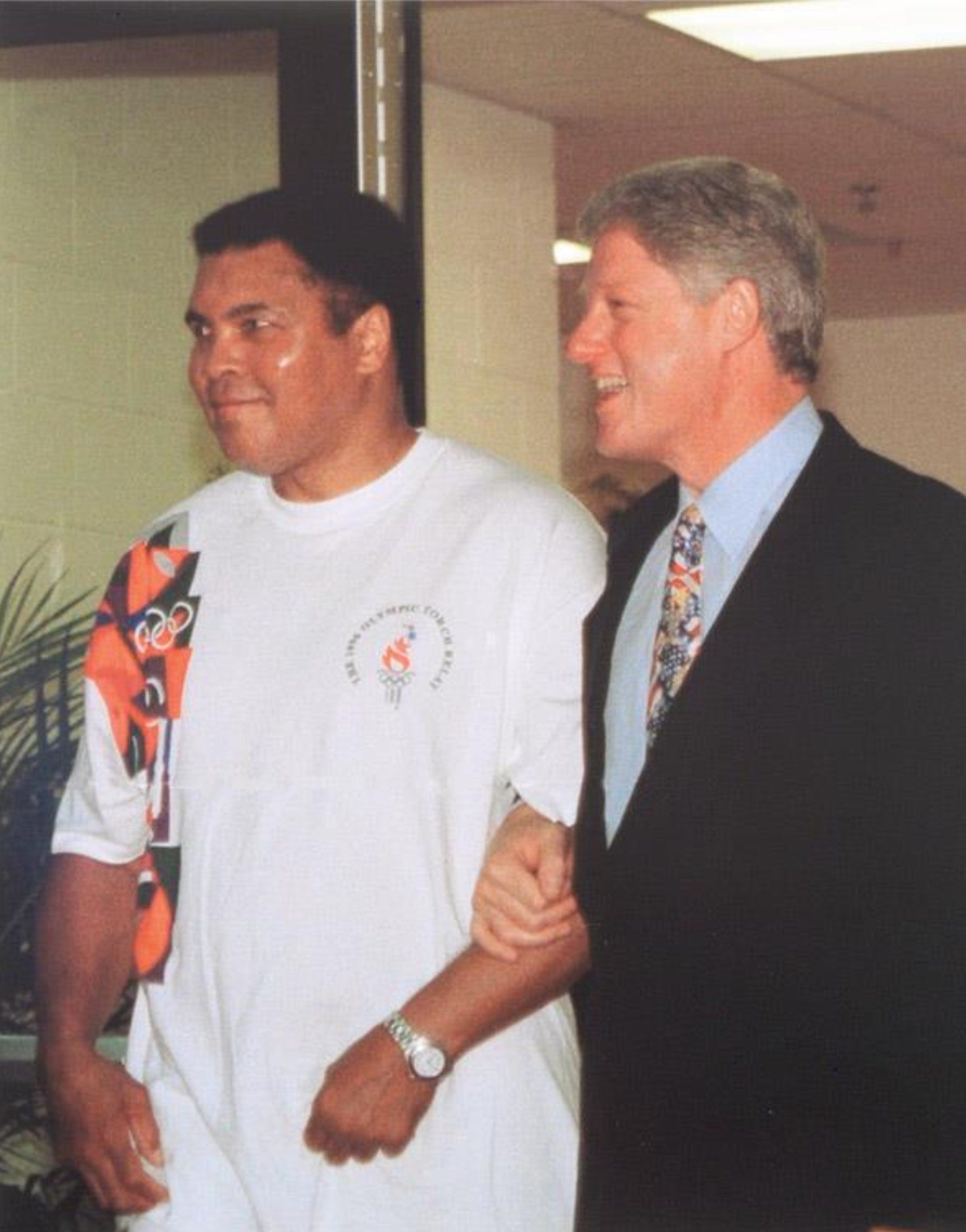
One of those cheering in the audience was the US President, Bill Clinton. In a touching tribute, he recalled the moment during his 2016 eulogy for Ali following his death at the age of 74.
“I was weeping like a baby seeing his hands shake,” said Clinton. “No matter what it took, the flame would be lit. The fight would be won. I knew it would happen.”
If you enjoyed this article please consider hitting the “like” button or leaving a comment as it helps with our ranking on Substack.
If you have any comments or suggestions pleased contact Duncan Mackay via the Substack App or email him at duncanmackayjournalist@gmail.com.
This is a fantastic backstory of a truly iconic Olympic cauldron lighting. It's one of my favorite memories of watching the Opening Ceremonies on tv as a kid. Bob Costas has a great interview about this moment and it's significance: https://youtu.be/eJCdsRO7_Gg?si=4kMXcx2u7XOydx-P