
Spectacular Opening Ceremony for Milan Cortina 2026 Winter Paralympics overshadowed by boycott in protest at return of Russia and Belarus
Disapproval at the appearance of Russia and Belarus under their own flags, even though the war in Ukraine in continuing, saw a reduced turn-out at the event in Verona. Philip Barker reports

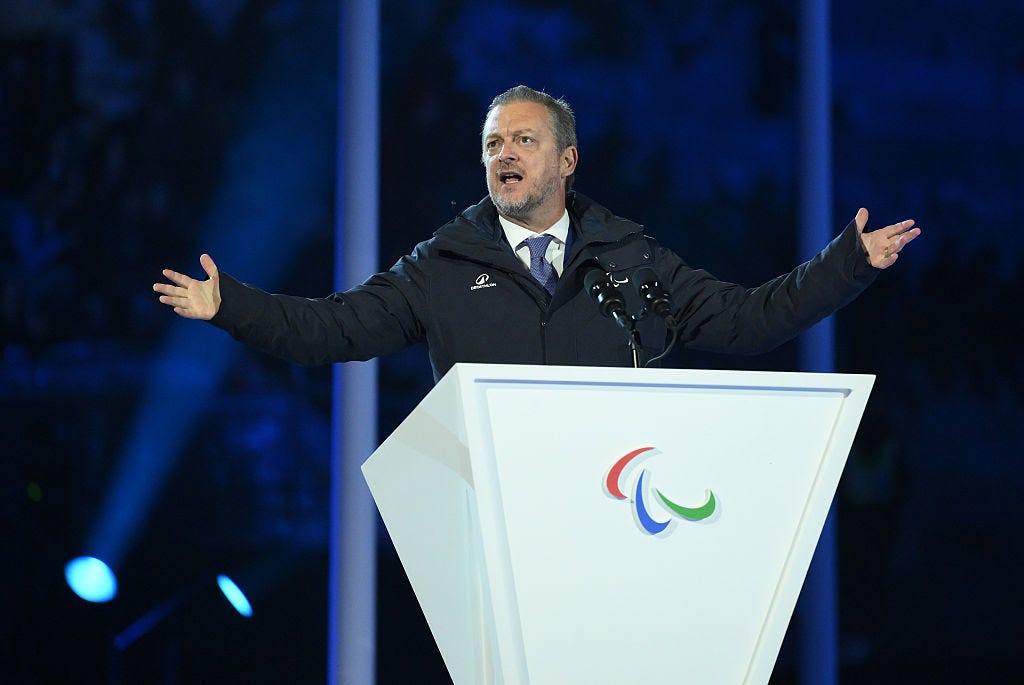
The Winter Paralympic Games began at the Arena di Verona with a superbly conceived Opening Ceremony but with another passionate and uncompromising message from International Paralympic Committee President Andrew Parsons.
They were words designed to reach the ears of politicians who tried to again hijack the Winter Paralympics, which is taking place under the shadow of conflict for the third time in four editions.
Parsons said, “Four years ago, I said I was horrified at what was happening in the world. Unfortunately, the situation has not improved.
“Here, nations gather as neighbours, and athletes compete with ferocity and fairness, united in respect for one another and of the rules of sport and tonight in this ancient arena - where gladiators once stood - we welcome a new generation of heroes.
“In a world where some countries are better known by the names of their leaders, I prefer to know countries by the names of their athletes.”
The gathering of nations did not include Iran. Cross-country skier Aboulfazl Khatibi Mianaei had been set for his third Paralympics, but Iranian officials insisted “safe passage” was impossible after the start of the conflict last week with the United States and Israel.
Parsons revealed officials had been “working tirelessly” with the Iranians to find alternative routes. “However, with the conflict ongoing across the Middle East, the risk to human life is too high,” he concluded.
Only 28 of the 55 nations competing at Milan Cortina 2026 took part in the parade. There were no Ukrainians in protest at the re-admission of Russia and Belarus, decided at the IPC Congress in Seoul last September.
It was Russia’s first appearance under their own flag since Sochi 2014, when they hosted the Winter Paralympics, having since been banned for state-sponsored doping, forced to compete as neutrals following a suspension related to the drugs scandal and then kicked out of Beijing 2022 after the invasion of Ukraine.
In fact, only four Russians paraded in Verona. Visually impaired cross-country skier Anastasia Bagiyan, her guide Sergey Sinyan, Russian Paralympic Committee President Pavel Rozhkov and team attaché Ekaterina Pronina. All wore long red coats with Russian emblems in gold. There were pockets of booing from the crowd.
Earlier, cross-country skiers Lidziya Loban and Valiantsina Biryla represented Belarus on stage.
In a statement, the Lithuanian Department of Foreign Affairs had repeated their condemnation of the IPC decision to allow the return of Russia and Belarus.
“We also deplore the decision by the IPC to prohibit Ukrainian athletes from wearing costumes featuring a map of Ukraine,” the statement, which claimed support from Estonia, Finland, Iceland, Latvia, Poland, Romania and Sweden, said.
“We support Italy as the host nation of the Games in its call on the IPC to revoke its decisions, thus aiming to prevent the display of the state symbols of the aggressor state and its accomplice during the Games.”
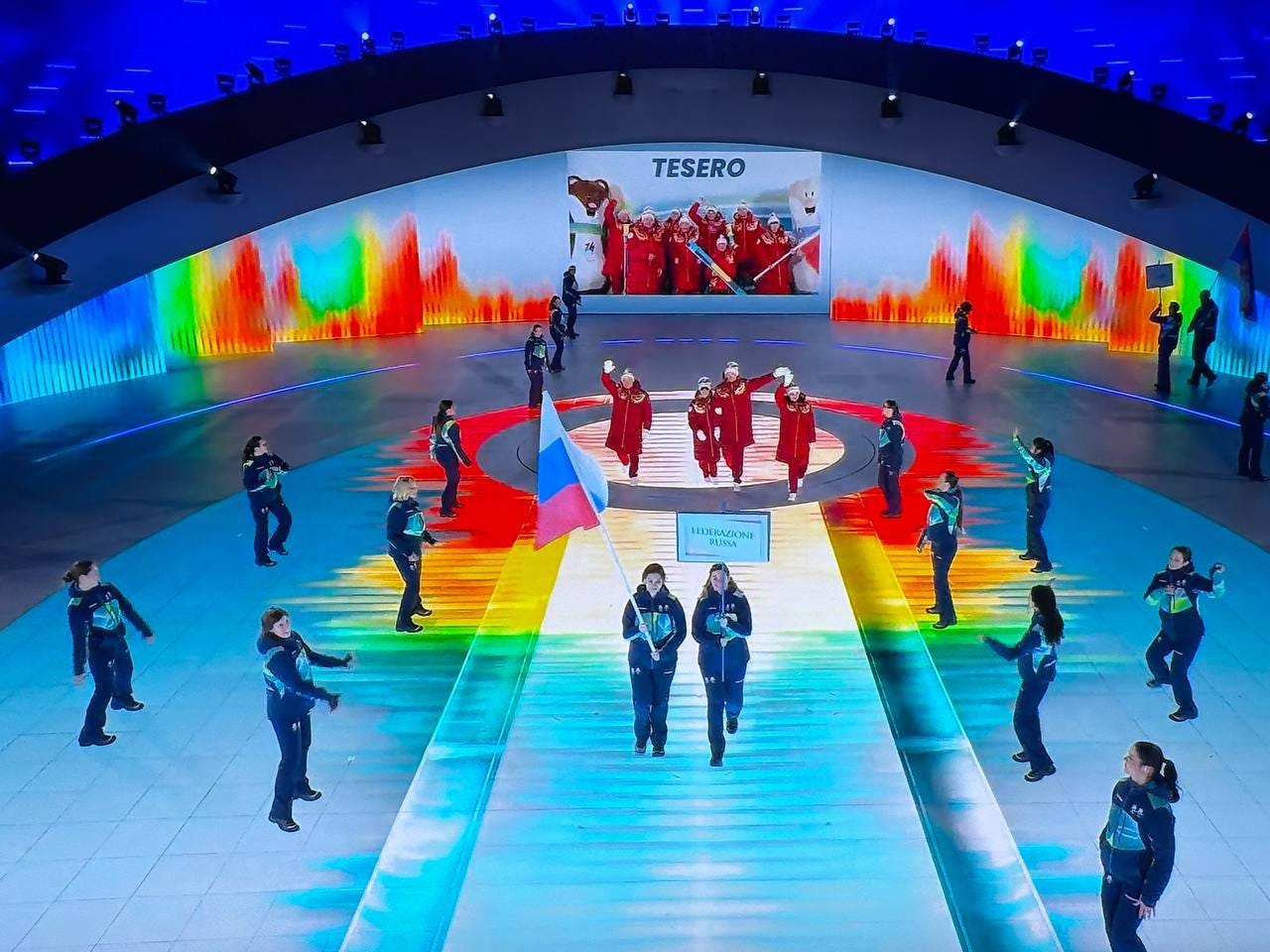
Flags and name plates of all nations were carried by volunteers, while a pre-filmed sequence of each flag was projected on the big screen at the appropriate moment.
Italian President Sergio Mattarella, Prime Minister Giorgia Meloni and International Olympic Committee President Kirsty Coventry witnessed a show which began when Elisa “Helly” Montin, a world champion drummer based in Verona, Cornel Hrisca-Munn, born without forearms and Stewart Copeland, drummer for British group, The Police, at the height of their fame, struck a beat to “ignite the enthusiasm of the athletes”.
Chiara Bersani, an activist, dancer and choreographer with osteogenesis imperfecta, brittle bone disease, set the performance in motion with a gesture.
The Italian flag was brought in by model and influencer Carlotta Bertotti. She removed her makeup to reveal a birthmark. This was to champion an “acceptance of self.”
The flag was received by Veronica Yoko Kebani, who competed in snowboard for Italy at the 2014 Paralympic Games in Sochi, canoeing at Rio 2016 and won a Paralympic bronze medal at Tokyo 2020 and silver at Paris 2024.
Italian singer Mimì Caruso performed the national anthem, accompanied by Ginevra Nervi and the Verona Alpine choir.
On stage, volunteers formed the Agitos, the Paralympic symbol adopted in 2004 and first seen at the Winter Paralympics when they were last held in Italy in Turin 20 years ago. DJ Michele Specchiale, better known as “Miky Bionic”, used his prosthetic artificial hand to control the music console in a sequence called Life in Motion.
A further segment featured Dario Faini, known as Dardust, performing from a platform inspired by the designs of Leonardo da Vinci.
Milan Cortina 2026 President Giovanni Malagò paid tribute to the role of Italy’s Antonio Maglio in helping establish the first International Paralympic Games in Rome in 1960.
He told the crowd, “Italy’s bond with Paralympic history is rooted in a chapter of our history. Together with Ludwig Guttmann, the father of the Paralympics, Italian physician Antonio Maglio championed the first Paralympic Games.
“They were held in Rome alongside the 1960 Olympics, marking our nation's rebirth in the eyes of the world after the devastation of the Second World War.
“Of course, we cannot ignore that these Paralympic Games take place in a deeply divided world at one of the most dramatic turning points of our time. For this very reason, the message of peace is more meaningful and more important than ever.”
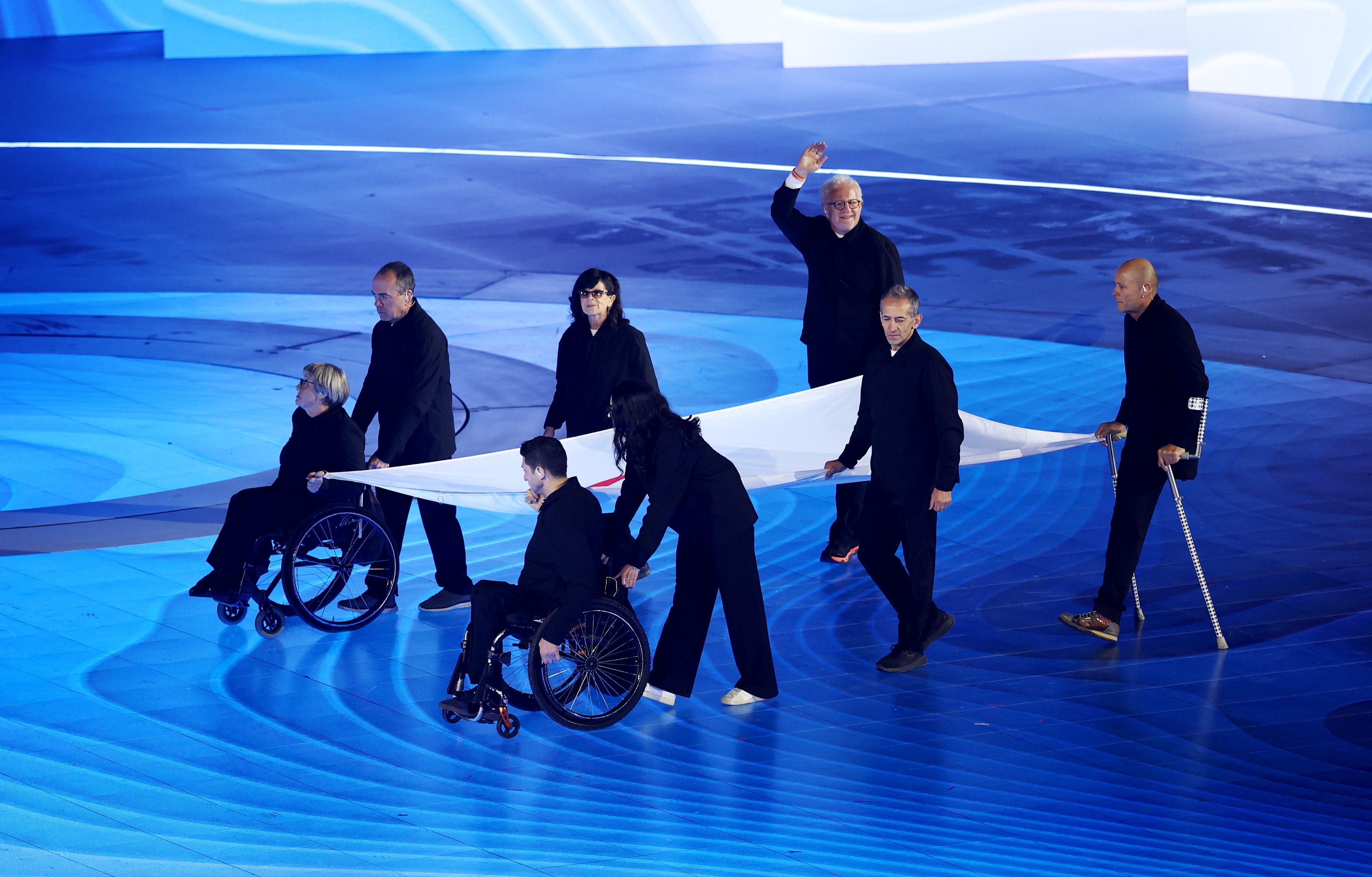
A performance inspired by the most famous play set in Verona, William Shakespeare’s Romeo and Juliet was the prelude to the arrival of the Paralympic Flag.
It was trooped in by a colour party which was a veritable Italian Paralympic Hall of Fame. Angelo Zanotti, double gold medallist in Alpine skiing at Nagano 1998, Silvia Parente, skiing slalom gold medallist at Turin 2006, seven-time Paralympian skier Christian Lanthaler, winner of two silver medals at Salt Lake City 2002, and fellow skier Joseph Erlanger, winner of bronze at Innsbruck 1988 and Lillehammer 1994.
Barcelona 1992 wheelchair athletics gold medallist Enzo Masiello, who switched to cross-country skiing and won silver and bronze at Vancouver 2010, and Dorothea Agetle, winner of six medals in a career spanning four Games, were also part of the flag party.
There was also Daila Dameno, winner of skiing silver and bronze medals at Turin 2006 and a bronze in archery at Paris 2024.
The flag was raised to the Paralympic anthem, Hymn de L’Avenir, composed by Thierry Darnis and first played at the Paralympics 30 years ago.
Then the Flame arrived. Lit in Stoke Mandeville in England at the home of the Paralympics, it was brought in by Paralympic fencer Beatrice “Bebe” Vio, fencing champion at both Rio 2016 and Tokyo 2021.
On stage, dancers wearing electronic gloves swept the Flame into a symbolic fire which then seemed to transport it as far as the cauldron at the Arco Della Pace in Milan, where Gianmaria Dal Maistro, skiing gold medallist at Turin 2006, ignited the Flame. At the same moment, Francesca Porcellato, athletics gold medallist at Seoul in 1988 and ski champion at Vancouver 2010, set the cauldron in motion in Cortina.
There was still time for a message from Sophie Adenot, a French astronaut aboard at the International Space Station. In the stadium, Germany’s Michaela Benthaus, the first wheelchair user to travel in space, gave a final message.
It had been an inspiring ceremony, but events in the wider world seemed certain to overshadow the positive messages from Verona.
Any comments please contact Duncan Mackay via the Substack App or email him at duncanmackayjournalist@gmail.com.